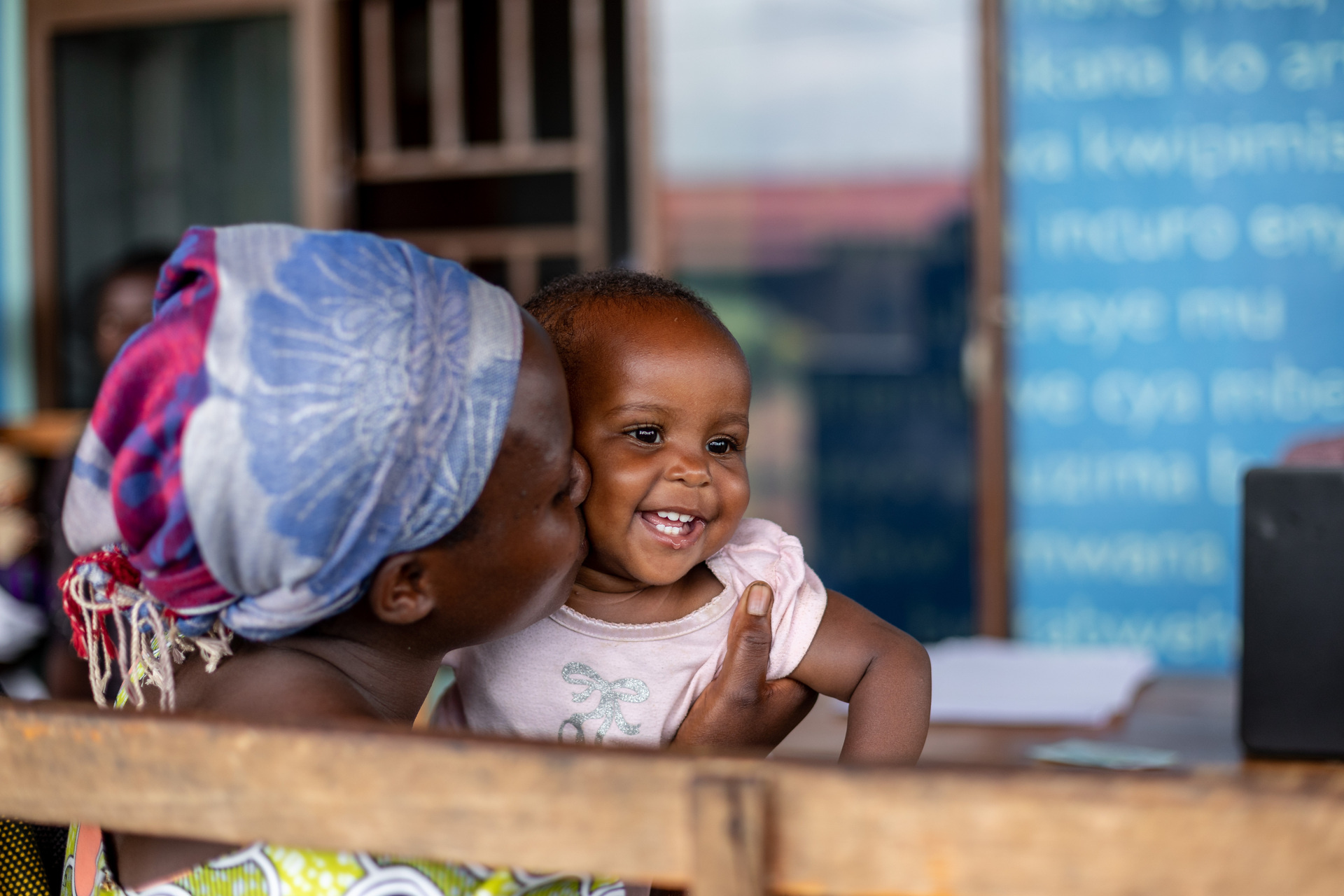
Dative snuggles her daughter in the waiting area at Musovu Health Post in Bugesera District, Rwanda. Dative came to the health post to seek health care. She is relieved to have a health post which is so close to her home so she can get treated quickly and get almost all health care services she needs here. I am happy that I receive services quickly here, and I am happy that this health post offers a range of services. For example, I can get treatment here as well as vitamins for my children. In fact, Dative took her two children with her to the health post knowing the maternal and child health (MCH) week is taking place during the visit so that they can receive deworming pills and vitamins. The Ministry of Health through Rwanda Biomedical Centre implements a maternal and child health (MCH) week twice a year to promote the health of the child countrywide. In collaboration with World Health Organization and several development partners, the decentralized and district-led campaigns deliver an integrated package of cost-effective preventative services to improve maternal and child health. MCH week also looks at providing interventions for neglected tropical diseases and nutrition. The services provided during the campaign include Vitamin A, deworming tablets, Ongera micronutrient and screening of malnutrition. These services are availed at Health Posts, in schools and door to door by CHWs under the coordination of the village leader and other local leaders. In schools, services are provided by teacher in class by class under coordination of school director. Health posts like this one serve as an interface between community health workers and the larger health centres in the area. Health posts are essential to ensuring communities can access primary health care services. The World Health Organization (WHO) is working with the Ministry of Health to deliver and strengthen universal health coverage (UHC) in Rwanda. Recently, WHO is supporting the Ministry to bring greater numbers of health posts to communities, aiming to reduce walking time to a health post to under 25 minutes by 2024.
الأمم المتحدة : وفاة 4.9 مليون طفل دون الخامسة في 2024
Dative snuggles her daughter in the waiting area at Musovu Health Post in Bugesera District, Rwanda. Dative came to the health post to seek health care. She is relieved to have a health post which is so close to her home so she can get treated quickly and get almost all health care services she needs here. I am happy that I receive services quickly here, and I am happy that this health post offers a range of services. For example, I can get treatment here as well as vitamins for my children. In fact, Dative took her two children with her to the health post knowing the maternal and child health (MCH) week is taking place during the visit so that they can receive deworming pills and vitamins. The Ministry of Health through Rwanda Biomedical Centre implements a maternal and child health (MCH) week twice a year to promote the health of the child countrywide. In collaboration with World Health Organization and several development partners, the decentralized and district-led campaigns deliver an integrated package of cost-effective preventative services to improve maternal and child health. MCH week also looks at providing interventions for neglected tropical diseases and nutrition. The services provided during the campaign include Vitamin A, deworming tablets, Ongera micronutrient and screening of malnutrition. These services are availed at Health Posts, in schools and door to door by CHWs under the coordination of the village leader and other local leaders. In schools, services are provided by teacher in class by class under coordination of school director. Health posts like this one serve as an interface between community health workers and the larger health centres in the area. Health posts are essential to ensuring communities can access primary health care services. The World Health Organization (WHO) is working with the Ministry of Health to deliver and strengthen universal health coverage (UHC) in Rwanda. Recently, WHO is supporting the Ministry to bring greater numbers of health posts to communities, aiming to reduce walking time to a health post to under 25 minutes by 2024.
وفيات الأطفال دون الخامسة: 4.9 مليون حالة في 2024 رغم التقدم الصحي العالمي
تقرير أممي يكشف تباطؤ تراجع وفيات الأطفال
أظهرت تقديرات حديثة صادرة عن الأمم المتحدة أن نحو 4.9 مليون طفل دون سن الخامسة توفوا خلال عام 2024، في مؤشر مقلق على تباطؤ التقدم العالمي في خفض معدلات وفيات الأطفال.
ويشير التقرير إلى أن هذا التباطؤ بدأ قبل التخفيضات التي شهدتها ميزانيات المساعدات الدولية خلال العام الماضي.
أسباب وفيات يمكن تفاديها بتدخلات بسيطة
أكدت كل من منظمة الأمم المتحدة للطفولة (اليونيسف) و**البنك الدولي** و**منظمة الصحة العالمية**، إلى جانب شعبة السكان بالأمم المتحدة، أن غالبية هذه الوفيات كان بالإمكان تفاديها.
وأوضحت أن الحلول تشمل:
تحسين الوصول إلى خدمات الرعاية الصحية
توفير تدخلات منخفضة التكلفة
معالجة مضاعفات الولادة المبكرة
مكافحة أمراض مثل الملاريا
تراجع كبير منذ 2000… لكن الزخم يتباطأ
أشار التقرير إلى أن الوفيات التي يمكن الوقاية منها بين الأطفال انخفضت بأكثر من 50% منذ عام 2000، وهو إنجاز مهم في مجال الصحة العالمية.
غير أن وتيرة التقدم شهدت تباطؤاً ملحوظاً منذ عام 2015، ما يثير مخاوف بشأن تحقيق الأهداف الصحية الدولية في المستقبل.
بيانات موثوقة من مؤسسات دولية
استند التقرير إلى بيانات رسمية صادرة عن الأمم المتحدة، بالإضافة إلى تقديرات كلية جونز هوبكنز بلومبرغ للصحة العامة، ما يعزز من دقة النتائج ومصداقيتها.
دعوة لتعزيز الاستثمارات في صحة الأطفال
تشدد المنظمات الدولية على ضرورة:
زيادة الاستثمارات في قطاع الصحة
توسيع التغطية الصحية للأطفال
دعم البرامج الوقائية والعلاجية
وذلك بهدف تسريع وتيرة خفض وفيات الأطفال وضمان مستقبل صحي أفضل للأجيال القادمة.